
The Sea Turtle Story Behind Los Cabos: A Beautiful Reason to Travel More Responsibly
The Sea Turtle Story Behind Los Cabos: A Beautiful Reason to Travel More Responsibly
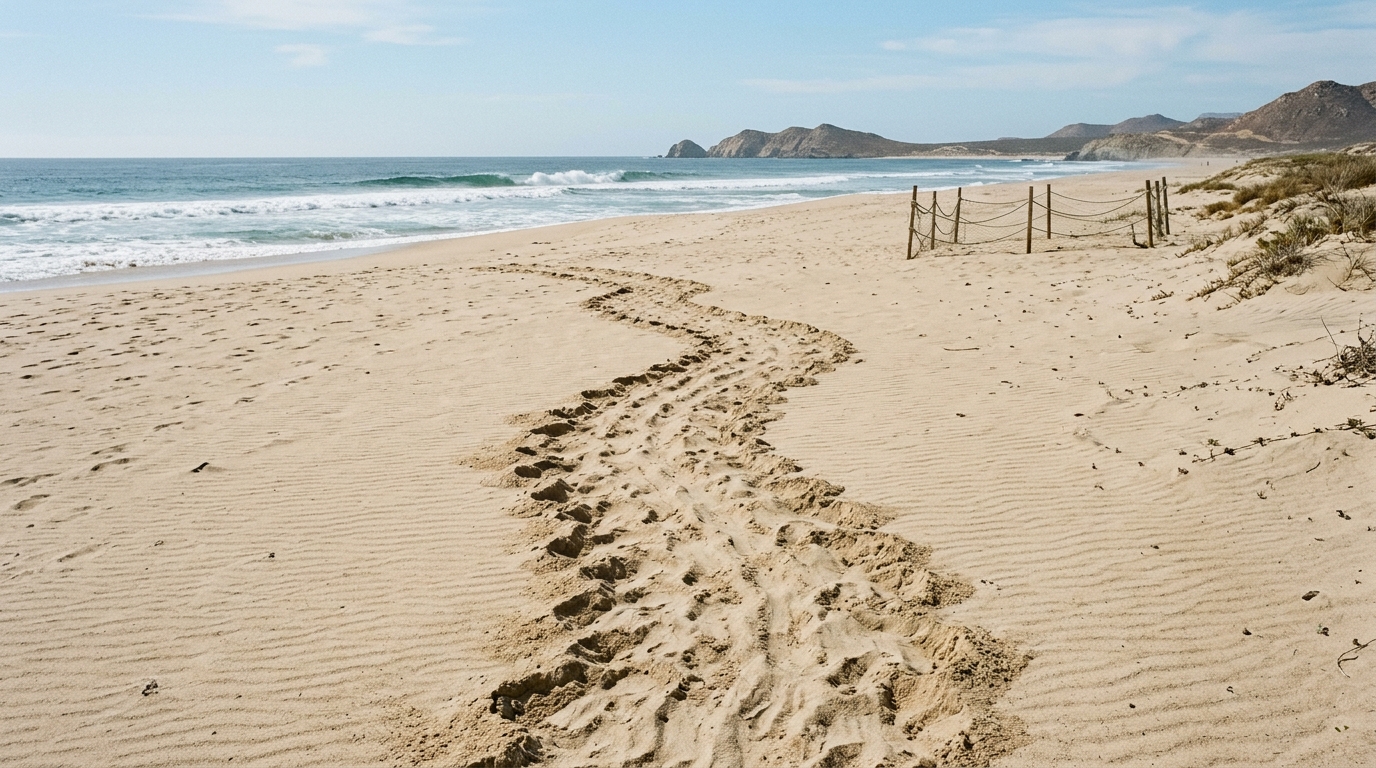
At night, a Los Cabos beach can become something very different from the scene we photograph by day. The sand is no longer just a place for towels and footprints. It is part of a cycle that began long before tourism—and in 2026, the work to protect that cycle made important local news.
The Night the Shoreline Became a Nursery
There is a reason sea turtle stories stay with people. The creatures spend most of their lives in water that feels impossibly large, then return to beaches where every obstacle matters: a misplaced light, a hole in the sand, a vehicle track, an unattended dog. The shore that looks effortless in a travel photograph is actually part of a fragile living system.
In August 2026, Mexico’s federal environmental authorities reported a coordinated operation near El Médano in Cabo San Lucas after the arrival of approximately 140 olive ridley turtles. The agencies described efforts to protect roughly 10,000 eggs by securing nests and moving them into protected incubation arrangements. That is a conservation action, not a claim that 10,000 turtles hatched successfully. The distinction is important—and the work itself is remarkable enough without exaggeration.
The operation involved environmental and maritime authorities along with local government and hotel-sector participants. That partnership matters. In a major visitor destination, protecting wildlife cannot be the job of one small team working in isolation. Beaches are shared spaces. So are the responsibilities that come with them.
Why This Is Good Tourism News
A destination can have exceptional scenery and still need to work hard to protect it. Sea turtle conservation is a reminder that the beauty of Los Cabos is not static. It must be managed in real time, often through actions that visitors never see: patrols, monitoring, protected nests, coordination between agencies and education around what people should do when wildlife appears.
Later 2026 reporting from the local municipality described reinforced monitoring in nesting areas and reminded the public not to touch turtles, approach them or use camera flashes around nesting activity. Those are straightforward instructions with an important purpose. Turtles are sensitive to disturbance, and well-meaning curiosity can still cause harm. A responsible visitor’s best contribution may simply be staying back and leaving the space alone.
This is a positive story because it shows conservation taking place where tourism is visible. The same coastline that supports restaurants, hotels and day trips also serves a larger ecological role. Visitors who understand both sides tend to appreciate the place more deeply. They see not only a spectacular seascape, but a living habitat that deserves care.
Wildlife Does Not Work on a Tourist Schedule
One of the easiest mistakes to make with wildlife tourism is imagining that nature follows the same logic as an attraction. You choose a date, arrive at the right time and expect something extraordinary to happen. Sea turtles do not work that way. Nesting and hatching vary with season and conditions, and specific observations are never guaranteed.
That is why conservation-first encounters matter. If you are interested in learning about turtles, seek information from authorized conservation programs and local environmental organizations rather than trying to find nesting animals on your own. Do not enter marked nesting areas. Do not handle eggs or hatchlings. Do not attempt to guide wildlife with a phone flashlight. If a wildlife activity is being advertised, ask whether it is authorized and whether its practices put the animals first.
It is possible to have a deeply memorable Los Cabos vacation without touching a single wild creature. In fact, that is often the best kind. Watch from an appropriate distance when permitted, learn why the habitat matters, and accept that some of the most important conservation work happens out of sight.
The Beach Is Connected to Everything Around It
The broader coastal environment shapes the experience far beyond turtle nesting. Dunes, native plants, rocky shores and underwater habitats are part of the same system. The way people walk onto a beach, dispose of waste or use artificial lighting can matter. A little restraint from each person can help preserve what brought everybody there in the first place.
Los Cabos gives travelers different ways to experience that relationship. Around Cabo San Lucas, the coast is often social and busy. Along the East Cape, some settings feel more open and less developed. On the Pacific side, surf and exposed shoreline create another set of conditions. Neither busy nor quiet automatically means better managed; each area deserves attention to local rules, access and environmental sensitivity.
Responsible travel is not necessarily about choosing the most remote place. It is about behaving responsibly wherever you go. Use established access points. Keep a respectful distance from nesting areas and animals. Support businesses that take their environmental obligations seriously. Bring back photographs and memories—not objects removed from the shore.
A Different Definition of a Great Beach Vacation
Think about the way families remember travel. Often the lasting moments are surprisingly small: the first time a child notices how many stars are visible, a quiet morning when the wind changes, an unexpected conversation with someone who knows the coastline well. Wildlife can create that sense of wonder, but only if the encounter is approached with respect rather than entitlement.
For travelers, there is a growing appeal in experiences that leave room for curiosity and learning. An ocean-focused trip can combine beaches, local food, cultural stops and an understanding of the conservation work nearby. You can explore San José del Cabo on one day and spend another enjoying the coast with a more careful eye. Farther north, the atmosphere of Los Barriles or La Paz offers additional ways to connect with Baja’s natural identity.
The goal is not to turn every holiday into a lecture. It is to leave with a richer relationship to the place. Once you know the shore is used by nesting turtles, the sand stops looking like an empty stage. It becomes a shared environment with its own calendar, needs and rhythms.
What the Numbers Do—and Do Not—Tell Us
A report that mentions approximately 10,000 protected eggs is striking. It deserves care in the telling. Eggs protected from immediate risk are not the same as eggs that hatch, and hatchlings reaching the sea are not the same as turtles surviving to adulthood. Every stage has its own challenges. Credible conservation reporting keeps those distinctions visible instead of turning a complex effort into an easy success slogan.
The 2026 federal release described a coordinated response to a significant nesting event near a popular beach. Later local warnings emphasized distance, darkness and not handling the animals. Together, those reports tell a more useful story than a single big number: teams respond, habitat is monitored, the public receives guidance, and the outcome depends on continued care. Conservation is a process, not a ceremony.
For travelers, the lesson is to be curious without demanding a spectacle. Ask a recognized conservation organization about its educational work. Respect any access restrictions. Understand that a photograph is not worth interfering with nesting behavior. When the most memorable thing you do is simply leave wildlife undisturbed, that can be a genuine contribution.
The Little Choices That Matter After Sunset
Coastal nights can be tempting times to explore: cooler air, moonlit water, long walks after dinner. In areas used by nesting turtles, however, light and movement require extra care. Artificial light can confuse wildlife. Crowds and noise can disturb animals that need calm conditions. Marked protection zones exist for a reason, even when the beach appears empty. Follow local directions rather than guessing what is harmless.
Property owners near sensitive shorelines have an especially important role. Exterior lighting, pet control, landscaping practices, private beach access and the behavior of visitors can affect nearby habitat. The precise rules vary by location and should be checked with qualified local authorities. Good stewardship starts with noticing that even an elegant home beside the sea is part of an ecosystem rather than detached from it.
This is not an argument against tourism or coastal living. It is an argument for making both more durable. Los Cabos can be a wonderful place to visit and a meaningful place to call home, provided the natural systems behind that appeal are given room to function. The best positive news is not that every problem has been solved. It is that people are showing up to do the work.
A Beach Worth Visiting Again
A thoughtful vacation is not measured only by activities booked. It is also measured by how carefully we enter a place, what we learn while there and whether we would be proud to return. For Los Cabos, that means enjoying the coast while understanding that its beauty depends on living systems, people and ongoing protection. The next time you walk beside the ocean, look for the care behind the view. It might change how you remember the destination—and how you choose to visit it again.
What This Means for People Who Want to Stay
People buying homes near the ocean are not simply buying scenery. They are entering a community with ecological responsibilities, access rules and sometimes special restrictions related to protected habitats. That makes environmental awareness part of sensible due diligence, especially for projects near sensitive coastal zones. A beautiful view is not permission to ignore the systems that make it possible.
A buyer exploring Cabo San Lucas, San José del Cabo or a nature-oriented area along the East Cape should ask about permitted use, environmental requirements, lighting, beach access, maintenance and how nearby land may be affected by conservation rules. These questions are not obstacles to enjoying a home. They help residents understand the place they are joining.
The positive conclusion is not that sea turtle conservation guarantees stronger real estate returns. It does not. The stronger conclusion is that the region’s natural appeal depends on serious protection, and that is worth knowing whether you visit for a week or plan to become a neighbor. The best version of Los Cabos has room for people and wildlife—provided people remember they are not the only ones who belong here.
A Few Questions Worth Asking
What happened during the 2026 sea turtle protection operation in Los Cabos?
In August 2026, federal authorities reported a coordinated operation near El Médano in Cabo San Lucas involving about 140 olive ridley turtles and protection measures for approximately 10,000 eggs.
Can visitors touch nesting sea turtles or hatchlings?
No. Visitors should not touch or move turtles, eggs or hatchlings. Keep a respectful distance, avoid camera flash and follow conservation personnel and local rules.
Are sea turtle sightings guaranteed during a Los Cabos trip?
No. Nesting and hatching depend on wildlife behavior and environmental conditions. Learn from authorized conservation efforts without expecting a guaranteed encounter.
Explore Los Cabos communities while keeping coastal stewardship and responsible ownership part of the conversation.
Explore the East CapeThe images shown are for reference purposes only and may not represent reality.
Categories
- All Blogs (98)
- Architecture & Design (1)
- beachfront (3)
- Beachfront & Ocean View Living (15)
- BUYER GUIDE (2)
- Buyer Guides (13)
- Buying Property in Los Cabos (7)
- cabo corridor (1)
- Cabo San Lucas (2)
- Community Guide (3)
- Destination Guides (1)
- development land (1)
- Dining & Social Scene (3)
- Discover the properties (1)
- East Cape (5)
- el tezal (1)
- Golf Communities (3)
- Golf, Marina & Wellness (5)
- Investment (1)
- INVESTMENT & MARKET (2)
- Investment Insights (16)
- La Paz (9)
- la ventana (1)
- Lifestyle (11)
- Lifestyle & Culture (7)
- Los Barriles (5)
- Los Cabos (5)
- Los Cabos Areas (9)
- Los Cabos Lifestyle (9)
- Los Cabos Lifestyle Guides (1)
- Los cabos Real Estate (8)
- Los Cabos Real Estate Guides (4)
- los cabos, (1)
- Luxury Real Estate (7)
- Luxury Real Estate Guides (16)
- marina and wellness (1)
- Mexico Real Estate Guides (1)
- Nature (1)
- Pacific (2)
- Practical Travel Guides (1)
- Premium Lifestyle (11)
- Real Estate Investment (7)
- real estate market (1)
- Relocation & Second Homes (17)
- San José del Cabo (6)
- sea of cortez (5)
- Second Homes & International Buyers (1)
- The Pacific (5)
- Todos Santos (5)
- travel (1)
- ZONE GUIDE (1)
Recent Posts






GET MORE INFORMATION
